The Hidden Costs of Subpar Lubrication
Authored by Clay Calk, Director of Market Development, Lubrication Engineers, Inc.
Industrial equipment operates under some of the harshest conditions found in manufacturing, mining, construction, and power generation. Yet one of the most common sources of equipment failure is also one of the easiest to overlook: improper lubrication. In this article, Clay Calk of Lubrication Engineers explains how contamination, moisture, and incorrect lubricant selection quietly erode reliability and drive up operating costs, and how better lubrication practices can reverse those losses.
What You Will Learn
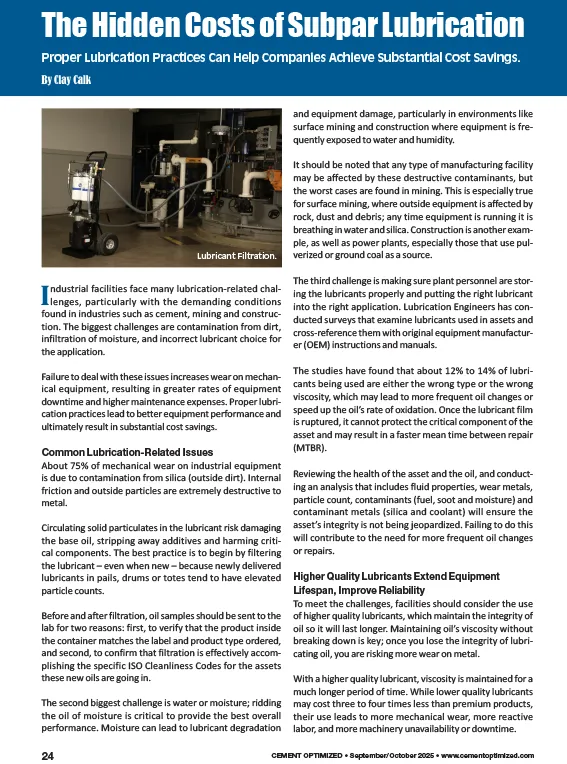
When equipment fails unexpectedly, the root cause is often tied to issues like dirt ingress, moisture contamination, or a lubricant that is not suited to the application. These problems accelerate wear, shorten lubricant life, and force maintenance teams into a reactive cycle of repairs, part replacements, and unplanned downtime.
High-quality lubricants, combined with proper storage, filtration, oil analysis, and preventive maintenance, can significantly extend equipment life and reduce operating costs. Many facilities discover that simply upgrading their lubrication program results in fewer oil changes, reduced labor, lower energy usage, and measurable improvements in equipment reliability.
This article outlines the hidden financial impact of poor lubrication practices and highlights real-world examples where companies achieved significant ROI by improving lubricant quality, contamination control, and maintenance strategies.